
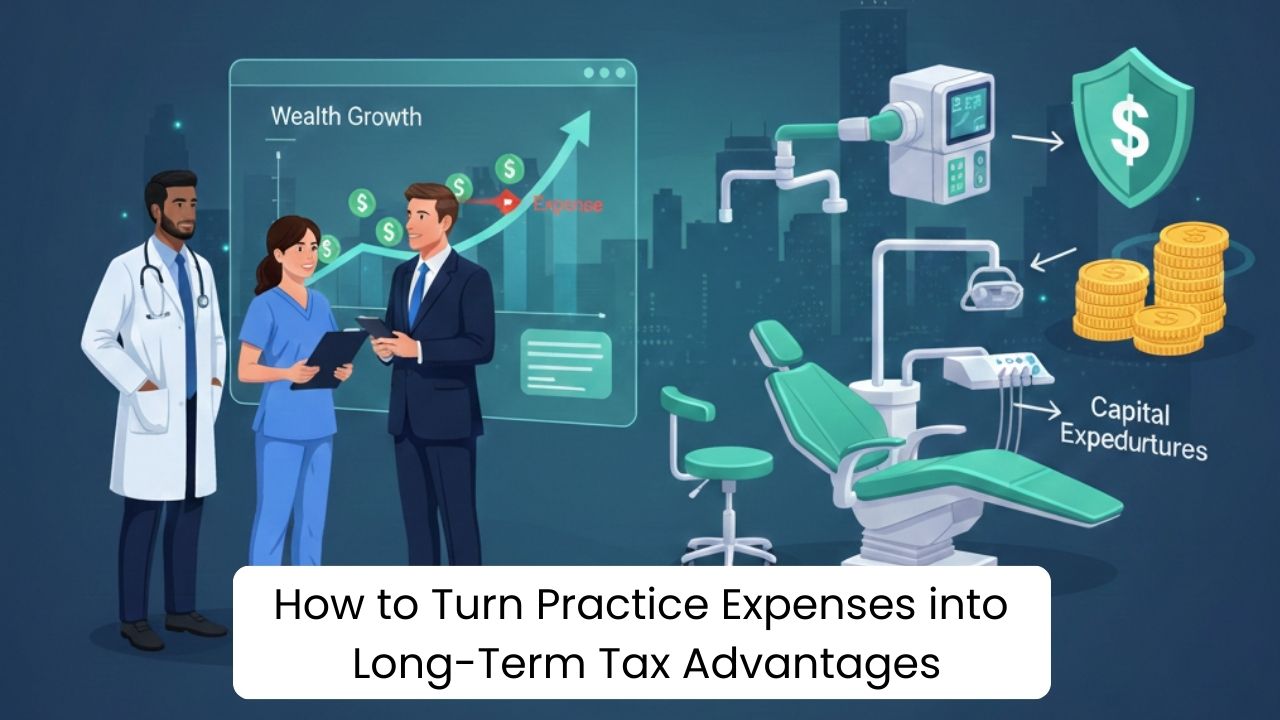
Every dollar spent on your practice is an investment, but without a strategic tax lens, many of those dollars disappear into overhead. For medical and dental professionals, the goal is not just tracking expenses, it is converting them into long-term tax advantages that support growth and personal wealth.
At Saluja & Associates CPA, we help Houston-based practitioners move beyond bookkeeping and into proactive tax strategy. Here is how you can turn routine expenses into a powerful tax shield.
1. Shift from “Spending” to “Investing” (CapEx vs. OpEx)
Not all expenses are treated the same for tax purposes. Understanding the difference between Operating Expenses and Capital Expenditures is the first step toward optimization.
- Operating Expenses (OpEx): Rent, payroll, utilities, and supplies. These are generally fully deductible in the year paid.
- Capital Expenditures (CapEx): Long-term investments such as digital imaging systems, surgical equipment, or office renovations. These typically provide benefits over multiple years but may qualify for accelerated deductions.
Strategic planning determines whether a purchase simply reduces this year’s taxes or creates a long-term advantage.
2. Leverage Section 179 and Bonus Depreciation
Accelerated depreciation remains one of the most effective tools available to practice owners.
- Section 179: For 2026, qualifying equipment purchases up to $2,560,000 may be deducted in the year placed in service, subject to limits.
- Bonus Depreciation: Allows accelerated write-offs on eligible property and is particularly useful for major build-outs or expansions.
When coordinated with income projections, these strategies can significantly reduce taxable income while preserving working capital.
Planning Insight: Bonus depreciation may generate a Net Operating Loss (NOL), which can potentially offset income in future years.
3. The Augusta Rule for Strategic Meetings
Your practice may rent your personal residence for up to 14 days per year for legitimate business meetings.
- The practice deducts the rental expense.
- You receive the rental income tax-free at the individual level.
This shifts funds from a taxable business position into a tax-free personal benefit when structured properly.
4. Employing Family Members
If family members perform legitimate services such as administrative support or marketing assistance placing them on payroll can create income-shifting opportunities.
Compensation paid becomes a deductible business expense while potentially being taxed at a lower individual rate. Proper documentation and compliance are essential.
5. Strategic Entity Structuring
Business structure directly impacts self-employment tax exposure.
Transitioning from a sole proprietorship to an S-Corporation may allow income to be divided between salary and distributions.
- Salary is subject to payroll taxes.
- Distributions are generally not subject to self-employment tax.
For high-income physicians and dentists, this structural adjustment can create substantial annual savings when implemented correctly.
Why Houston-Specific Expertise Matters
Texas tax rules include unique considerations such as franchise tax requirements, property taxation on equipment, and state-level conformity to federal depreciation guidelines.
Working with a Houston-based advisor who understands medical practice operations ensures local compliance while identifying opportunities others may overlook.
Ready to Upgrade Your Tax Strategy?
At Saluja & Associates CPA, we help medical and dental practices across Houston implement tax strategies that support long-term growth.
If you are ready to move beyond reactive filing and toward proactive planning, schedule a strategy call with our team today.
Contact us to schedule a consultation
Frequently Asked Questions
Yes. In 2026, you can deduct the full purchase price of qualifying equipment (up to $2,560,000) in the year it’s placed in service. This applies to everything from dental chairs to diagnostic imaging machines, providing an immediate reduction in your taxable income.
The IRS allows you to rent your personal home to your practice for up to 14 days per year for legitimate business meetings. The practice gets a tax deduction for the rent paid, and you receive that income 100% tax-free on your personal return.
If your practice is consistently profitable, an S-Corp election can save you thousands in self-employment taxes. By splitting your income between a "reasonable salary" and shareholder distributions, you avoid the 15.3% tax on the distribution portion.
Yes. If your children perform actual work (filing, cleaning, social media), you can pay them a fair wage. In 2026, they can earn up to approximately $15,000 tax-free due to the standard deduction, while your practice receives a full deduction for the expense.
National firms often miss Texas-specific advantages, such as the state's unique franchise tax deductions and local property tax protests for medical equipment. A local specialist ensures your strategy is optimized for both federal laws and the Houston business environment.




6 Comments
porntude
Very good i like it