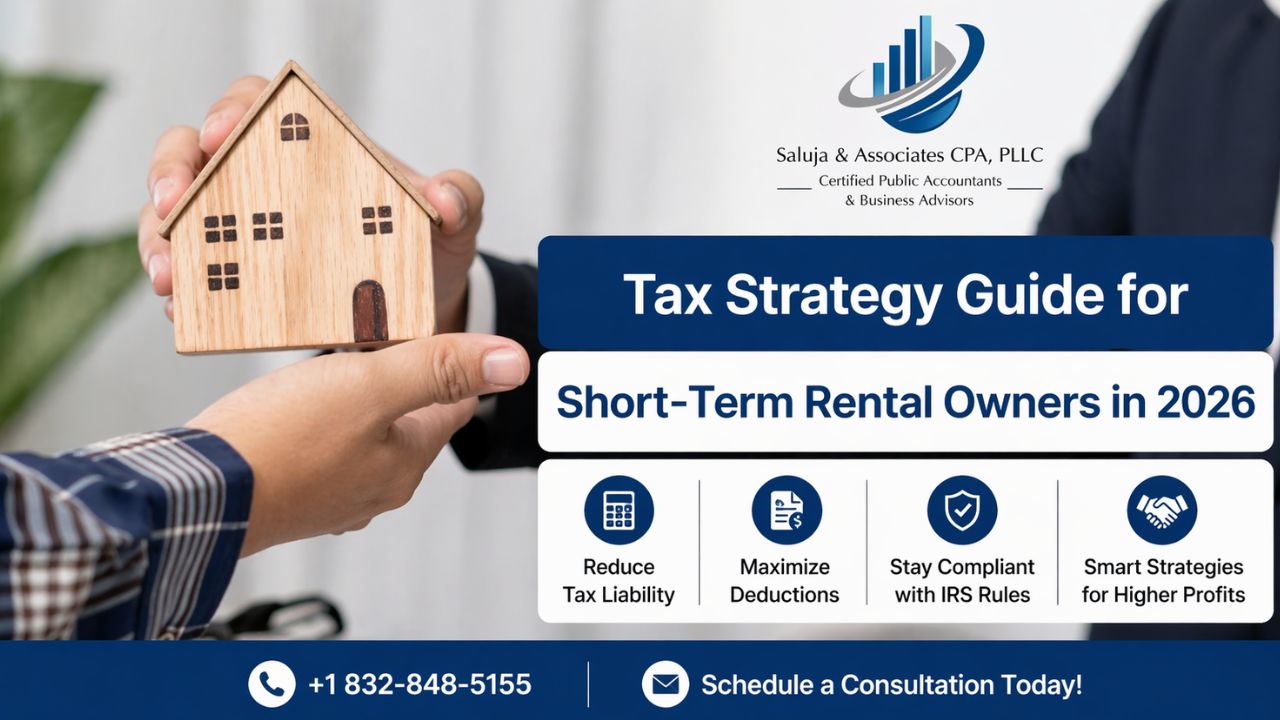
Short-term rentals through platforms like Airbnb and Vrbo continue to be a powerful income stream for property owners. However, with evolving tax regulations, reporting requirements, and new deduction opportunities, having a clear and proactive short-term rental tax strategy in 2026 is more important than ever.
Let’s understand practical and legally compliant strategies to help short-term rental owners reduce tax liability, maximize deductions, and stay compliant with IRS rules.
Why Tax Strategy Matters for Short-Term Rentals
Short-term rentals are treated differently than traditional long-term rental properties. They often fall into a hybrid category somewhere between passive income and active business income.
This classification directly impacts:
- How your rental income is taxed
- What deductions you are eligible to claim
- Whether you can offset losses against other income (like W-2 income)
Without proper planning, many property owners end up overpaying taxes or missing valuable tax-saving opportunities.
Understanding How Short-Term Rental Income Is Taxed
Income generated from short-term rentals must be reported to the Internal Revenue Service (IRS). In many cases, platforms issue Form 1099-K reporting your earnings.
Key Tax Classifications
- Passive Income: Applies if you are not actively involved in managing the property
- Active Income: Applies if you materially participate in operations
- Business Income: Applies if you provide substantial services (e.g., daily cleaning, meals, concierge services)
Important: Your classification determines whether you can use rental losses to offset other types of income.
Top Tax Strategies for Short-Term Rental Owners in 2026
1. Use the Short-Term Rental Tax Loophole
The short-term rental loophole is one of the most powerful tax-saving tools available.
You may qualify if:
- The average guest stay is 7 days or less
- You materially participate in managing the property
Benefits:
- Offset rental losses against active income (such as salary or business income)
- Significantly reduce overall tax liability
2. Maximize Depreciation Benefits
Depreciation allows you to deduct the cost of your property over time. However, short-term rental owners can accelerate these deductions using advanced strategies.
Key methods include:
- Bonus Depreciation
- Cost Segregation Studies
Advantages:
- Deduct a large portion of property costs upfront
- Reduce taxable income in early years
- Improve cash flow
3. Claim All Eligible Tax Deductions
Many rental owners miss deductions due to poor recordkeeping. Tracking every expense is essential.
Common deductible expenses include:
- Mortgage interest
- Property taxes
- Cleaning and maintenance
- Utilities and internet
- Platform service fees
- Furniture and appliances
- Repairs and supplies
- Insurance premiums
Pro Tip: Use accounting software or digital tools to track expenses monthly.
4. Track Personal vs Rental Use
If you use your property personally, your tax deductions may be limited.
IRS guidelines:
- More personal use = fewer allowable deductions
- Expenses must be allocated between personal and rental use
Accurate tracking helps ensure compliance and avoids audit risks.
5. Consider Forming an LLC
Setting up an LLC (Limited Liability Company) can offer:
- Liability protection
- Better financial separation
- Potential tax flexibility
Note: An LLC does not automatically reduce taxes. Proper structuring and tax elections are essential.
6. Understand Self-Employment Tax Risks
If your rental activity includes hotel-like services, your income may be subject to self-employment tax.
This can increase your total tax burden significantly, so it’s important to structure your operations carefully.
7. Stay Compliant with Local and State Taxes
In addition to federal taxes, many jurisdictions require:
- Occupancy taxes
- Sales taxes
- Local permits and licenses
Failure to comply can result in penalties—even if your federal filings are accurate.
8. Plan Your Year-End Tax Strategy
Effective tax planning should happen before the end of the year—not during filing season.
Smart year-end moves include:
- Purchasing equipment or furniture before December 31
- Prepaying certain expenses
- Conducting a cost segregation study
Common Tax Mistakes to Avoid
- Not reporting all rental income
- Mixing personal and rental expenses
- Missing depreciation opportunities
- Poor recordkeeping
- Ignoring local tax requirements
Avoiding these mistakes can help you stay compliant and reduce audit risk.
Final Thoughts
A well-planned short-term rental tax strategy can significantly improve your profitability. By leveraging deductions, understanding tax classifications, and planning ahead, you can legally minimize your tax burden while staying compliant. Get a customized tax strategy tailored to your short-term rental business.
Call: +1 832-848-5155
Schedule your consultation today with Saluja & Associates CPA and maximize your tax savings in 2026.
Frequently Asked Questions (FAQ)
Yes, all income from short-term rental platforms must be reported, even if you do not receive a tax form
It allows qualifying owners to treat rental losses as non-passive, enabling them to offset active income.
Yes, these can be deducted or depreciated depending on their cost and useful life.
No, but it can provide liability protection and help with business structuring.
You should maintain records of income, receipts, expenses, booking history, and maintenance logs.